
Join Us
in Defining the Future of Quantum Computing
We’re looking for people who are passionate about quantum physics, optical engineering, electronics, and low-temperature technology to help us build practical quantum computers.
Take On the Quantum Future with Us
We’re focused on neutral-atom quantum computing. Join us to work on cutting-edge full-system R&D and turn innovation into real products.
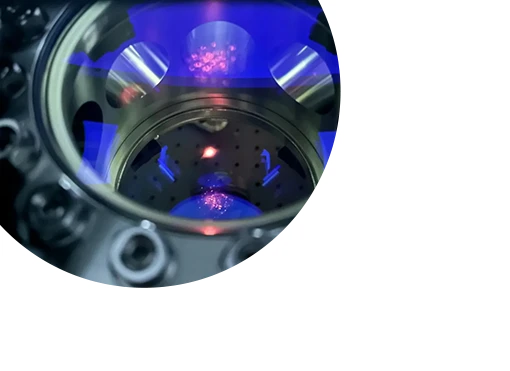
Frontier Challenges
Work across the full chain, from physical principles to engineering implementation, and solve genuinely hard problems.

World-Class Team
Work alongside senior engineers from physics, optics, electronics, software, and other fields.

Real Impact
Your work goes directly into the quantum computers we deliver to customers.
Open Positions
Join top talent from across disciplines and build practical quantum computers with your own hands, from first principles to full-system engineering.
PositionLocationJob TypeRecruitment TypeDepartment
Job Responsibilities
- 1.Develop the quantum simulator and related computational backends to support simulation and analysis of neutral-atom quantum systems;
2.Implement and optimize physical modeling and numerical methods to improve simulation accuracy, computational efficiency and the scale of systems that can be supported;
3.Establish validation and performance-evaluation frameworks for simulation results to ensure reliability of the computation;
4.Collaborate with the SDK, algorithm and hardware teams to integrate simulation capabilities with the execution framework, supporting algorithm research and experimental validation.
Job Requirements
- 1.Background in physics, applied mathematics, computer science or a related field, with a solid foundation in quantum mechanics and numerical computation.
2.Familiar with numerical computation and physical system simulation; research and development experience in computational physics or related scientific computing projects.
3.Proficient in Python and common scientific computing tools.
4.Strong scientific software development skills: able to turn physical models and numerical algorithms into reusable computational modules, with correctness verification, error analysis and performance optimization.
5.Experience with quantum simulators, numerical libraries or high-performance computing is a plus.
Job Responsibilities
- 1.Contribute to the development of quantum measurement and control software, which commands quantum hardware to execute operations in a defined sequence;
2.Write and optimize experiment control and data acquisition programs, enabling quantum algorithms to run automatically and repeatedly on hardware;
3.Work with colleagues in data acquisition, optics and hardware to turn experiment/equipment requirements into working software;
4.Analyze returned measurement data to help troubleshoot issues and improve the correctness and stability of quantum operations;
5.Build reusable measurement and control components, with well-written interfaces and usage documentation.
Job Requirements
- 1.Bachelor's degree or above, class of 2026; majors such as electronic information, automation, computer science, physics (experimental track) or related fields;
2.Proficient in C/C++ or Python (at least one), familiar with Linux environments;
3.Understanding of basic concepts of data acquisition, timing control and signal processing;
4.Willing to work closely with hardware and software; patient enough to debug, hunt down problems and iteratively tune parameters.
Nice to have
1.Have used or are aware of embedded devices, FPGAs or automated instrument control;
2.Some knowledge of quantum computing or atomic physics is a plus; not required — the team will mentor you.
Job Responsibilities
- 1.System architecture design and machine abstraction definition for a neutral-atom quantum computer (zone architecture, connectivity graph, movement model, Rydberg constraints, etc.);
2.Quantum compilation stack, including IR design, qubit mapping, routing and scheduling optimization;
3.Circuit compilation and resource optimization under hardware constraints.
Job Requirements
- 1.Degree in quantum computing, computer science, physics, mathematics or a related field;
2.Familiar with the principles of quantum circuit compilation, mapping and scheduling;
3.Proficient in Python, C++ or Rust, etc;
4.Strong system abstraction and architecture design skills.
Nice to have
1.Experience with neutral-atom platforms;
2.Familiar with FTQC architectures;
3.Experience in compiler architecture or system-level design;
4.Have contributed to quantum compilation frameworks.
Job Responsibilities
- 1. Responsible for the research and development of bioinformatics algorithms, and participate in the interdisciplinary research of quantum computing and life and health;
2. Conduct research related to genomic and multi omics data analysis, drug target discovery, or biomolecule simulation and design;
3. Track international cutting-edge developments and explore the application scenarios of quantum computing in life sciences;
4. Write papers, patents, and expand cooperation and exchanges with relevant research institutions at home and abroad.
Job Requirements
- 1.(For quantum simulation) Degree in physics, familiar with neutral-atom systems, with numerical computation experience such as tensor networks/DMRG.
2.(For quantum algorithms) Research background in quantum computing; understanding of classical quantum algorithms; familiarity with the capabilities and limitations of NISQ algorithms (QAOA/VQE); awareness of how noise affects algorithm performance and of error mitigation methods.
Job Responsibilities
- 1.Conduct research on quantum algorithms and explore their applications;
2.Driven by real application needs, design and optimize quantum optimization, quantum simulation and quantum machine learning algorithms;
3.On the neutral-atom quantum computing platform, explore quantum-classical hybrid computing frameworks to improve hardware adaptation and real-world deployment of quantum algorithms;
4.Track frontier progress in international quantum computing and related interdisciplinary fields, and contribute to the team's technical planning;
5.Publish papers and patents, and engage in collaboration and exchange with domestic and international research institutions.
3. Track international cutting-edge developments and explore the application scenarios of quantum computing in life sciences;
4. Write papers, patents, and expand cooperation and exchanges with relevant research institutions at home and abroad.
Job Requirements
- 1.PhD in quantum computing, physics, computer science, artificial intelligence or a related field;
2.Familiar with variational quantum algorithms (VQE, QAOA, etc.) or quantum machine learning (QNN, QRC, etc.), with solid theoretical grounding in quantum computing and the ability to engineer quantum algorithms;
3.Strong scientific writing and communication skills, a team player able to collaborate efficiently across disciplines;
4.Research experience in quantum computing is preferred.
Job Responsibilities
- 1.Own backend development of the quantum cloud platform, making the chain of job submission → queueing and scheduling → execution on real/simulated quantum hardware → result return stable, clear and scalable;
2.Package the low-level measurement-control and simulator capabilities into well-defined, easy-to-use service APIs for external and upper-layer systems;
3.Contribute to the development and support of internal management/tooling systems (the internal control platform), working with the team's delivery and management processes;
4.Build and maintain backend infrastructure such as job scheduling, message queues, caches and databases;
5.Write API documentation and usage guides, own testing and production quality of key modules, and continuously optimize concurrency and reliability.
Job Requirements
- 1.Bachelor's degree or above in computer science, software engineering or a related field, with 1–3 years of backend development experience;
2.Proficient in at least one server-side language (Python / Java / Go), understanding its concurrency model and common performance pitfalls;
3.Have used mainstream web backend frameworks, with end-to-end ability from module design and API development to integration and release;
4.Familiar with databases (SQL) and caching; understand the basics of asynchronous tasks / message queues and distributed systems;
5.Engineering discipline: writes tests and API documentation, cares about code quality and takes responsibility for production delivery.
Nice to have
1.Experience with containerization / cloud-native technologies (Docker, Kubernetes) or CI/CD pipelines;
2.Experience with API gateways, caller-facing service governance or SDK packaging;
3.Led or deeply contributed to API decomposition / platformization / multi-object multi-tenant design in medium-to-large systems;
4.Curious about quantum computing or scientific computing (able to call APIs and get things running — no physics background needed).
What we offer
1.Direct involvement in building a real neutral-atom quantum computer — real hardware, not simulation exercises;
2.The chance to work closely with colleagues across all disciplines (hardware, optics, compilation, algorithms).
Job Responsibilities
- 1.Conduct R&D on bioinformatics algorithms and participate in research at the intersection of quantum computing and life sciences;
2.Carry out research such as genomic and multi-omics data analysis, drug target discovery, or biomolecular simulation and design;
3.Track international frontier progress and identify application scenarios for quantum computing in the life sciences;
4.Publish papers and patents, and expand collaboration and exchange with domestic and international research institutions.
Job Requirements
- 1.PhD in bioinformatics, computational biology, quantum chemistry, biophysics or a related field;
2.Proficient in Python/R, with the ability to process biological data and write scripts;
3.Familiar with genomic sequence analysis (Minimap2, DeepVariant, etc.) or multiscale theory and computational methods for biological macromolecules (QM/MM, etc.); able to independently develop bioinformatics algorithms and analyze results;
4.Strong scientific writing and communication skills, a team player able to collaborate efficiently across disciplines.
Job Responsibilities
- 1.Lead R&D on core pangenome algorithms, focusing on haplotype-aware graph construction and incremental updating, sequence-to-graph alignment, and key algorithms such as seed retrieval, anchor chaining, candidate path selection and fine-grained alignment;
2.For large-scale genomic and long-read sequencing data, work on graph data structures, compressed indexes and algorithm performance optimization to improve the accuracy, scalability and computational efficiency of pangenome tools;
3.On problems such as complex repeat regions, structural variants and haplotype phasing, conduct algorithm evaluation and applied research, verify the real improvement of algorithms on variant detection, genotyping or local genome reconstruction, and establish reproducible evaluation pipelines;
4.Track frontier progress in pangenomics and computational biology, drive algorithm innovation based on real biological needs, and work with the quantum algorithm team to explore applications of quantum computing to relevant computational problems;
5.Publish academic papers, file patents, drive software implementation and application of research results, and engage in collaboration and exchange with domestic and international research institutions.
Job Requirements
- 1.PhD in bioinformatics, computational biology, computer science, applied mathematics or a related field;
2.Solid foundations in data structures and algorithms; able to independently carry out algorithm design, implementation, debugging and performance optimization;
3.Research experience in genomic sequence analysis or pangenomics; familiar with string algorithms, graph algorithms, dynamic programming, sequence indexing and related methods; able to design experiments, evaluate algorithms and analyze results with real sequencing data;
4.Familiar with one or more of Minigraph, Minigraph-Cactus, GraphAligner, vg, PGGB and related tools, and understanding of their core algorithmic principles; experience in algorithm R&D for sequence-to-graph alignment, graph construction, haplotype analysis or complex variant detection, or experience in source-code study, performance optimization or open-source contributions for such tools is preferred;
5.Good scientific writing, communication and teamwork skills, able to conduct interdisciplinary research; interested in research at the intersection of quantum computing and life sciences, with relevant background preferred.
Job Responsibilities
- 1.Conduct research and practical deployment of quantum-inspired algorithms, and participate in R&D on hybrid quantum-classical algorithms;
2.For real application scenarios, research and engineer quantum-inspired algorithms such as simulated bifurcation, leading end-to-end benchmarking and solution design;
3.Track international frontier progress and drive algorithm deployment and technology transfer;
4.Publish papers and patents, and engage in collaboration and exchange with domestic and international research institutions.
Job Requirements
- 1.Master's degree or above in computer science, applied mathematics, operations research, physics or a related field;
2.Familiar with quantum-inspired algorithms (bSB, SimCIM, etc.), classical optimization algorithms and operations research theory;
3.Strong scientific writing and communication skills, a team player able to collaborate efficiently across disciplines.
Job Responsibilities
- 1.Network architecture and security isolation — Plan, deploy and isolate office, laboratory and compute-cluster networks. Maintain firewall, VPN and VLAN policies, ensuring no unauthorized path exists between the lab network and the office network;
2.Linux server and development environment operations — Deploy servers, engineering workstations and storage; handle OS upgrades, performance monitoring and troubleshooting. Manage containerized runtime environments and continuous integration infrastructure;
3.Data backup and disaster recovery — Define and execute backup policies for code repositories, experimental data and critical configuration files; run periodic restore tests to ensure backups are valid and usable;
4.Full IT equipment lifecycle — Procurement and selection, deployment and integration, troubleshooting and vendor technical support for servers, lab instruments, network equipment and other IT hardware.
Job Requirements
- 1.Able to independently manage the deployment, monitoring and troubleshooting of 5-10 Linux servers;
2.Understand networking fundamentals such as TCP/IP, VLANs, firewall rules and VPNs, with hands-on configuration experience;
3.Experience installing GPU drivers, configuring compute environments and troubleshooting common issues;
4.Proficient with the Linux command line and shell scripting; able to automate simple operations with scripts;
5.Strong troubleshooting logic, able to localize root causes step by step from symptoms;
6.Basic information-security awareness (endpoint encryption, key management, access control);
7.Highly responsible and security-conscious, able to clearly document and institutionalize operations work.
Preferred
1.Experience operating compute clusters or high-performance servers;
2.Experience managing containerized environments;
3.Experience configuring network access for lab instruments or specialized hardware;
4.Familiarity with code platform management and CI pipeline maintenance;
5.Familiarity with network security baselines (port scanning, vulnerability remediation, log auditing).
Core competencies
1.Linux system administration;
2.Network isolation and security;
3.Fault diagnosis and methodology;
4.Independent delivery and self-motivation.
Job Responsibilities
- 1.Own the daily operation, inspection, maintenance and troubleshooting of laboratory infrastructure to ensure stable operation of experimental equipment;
2.Own the installation and daily maintenance of the lab's water-cooling system, including chillers, circulation lines, pumps and related interfaces; monitor water temperature, flow and pressure; handle leaks and cooling abnormalities;
3.Own the operation and maintenance of the lab's air-conditioning and humidity control (HVAC) systems; support experimental needs with temperature/humidity monitoring, parameter adjustment and improvements to environmental stability;
4.Based on equipment layout and usage needs, design, select, assemble and install structures such as aluminum profile frames, equipment supports and cabinets;
5.Support the experimental team with equipment move-in, facility modifications and the layout and organization of cooling lines and cabling;
6.Coordinate vendors and contractors; follow procurement, installation, commissioning and acceptance; maintain facility ledgers, maintenance records and operating procedures;
7.Communicate proactively with the R&D team to understand the temperature and humidity requirements of precision instruments and propose solutions;
8.Assist with the construction and planning of new laboratories, renovation of existing laboratories and equipment capacity expansion.
Job Requirements
- 1.Degree in mechanical engineering, mechatronics, HVAC or a related field, with three or more years of experience installing, maintaining and operating laboratory or industrial equipment;
2.Familiar with circulating water cooling, air conditioning and HVAC systems, with hands-on operation and troubleshooting ability;
3.Meticulous and responsible, able to communicate and collaborate with researchers and vendors;
4.Have participated in the construction, renovation or commissioning and acceptance of scientific laboratories;
5.Experience designing and assembling aluminum profile frames and equipment supports.
Nice to have
1.Experience maintaining facilities in precision optics laboratories, laser equipment or temperature/humidity-controlled environments;
2.Work experience in the semiconductor industry or cleanrooms (ultra-clean rooms), familiar with facility operations, temperature/humidity control and cleanliness management in clean environments;
3.Able to use CAD or 3D design software.
Job Responsibilities
- 1.Design analog circuits (SolidWorks for PCB CAD for cavity Zemax for optics);
2.Design and implement electronic and control systems for a neutral-atom quantum computing platform (analog / digital / RF / timing);
3.Own requirements analysis, component selection, circuit design, schematic and PCB design, and delivery of manufacturing files and bills of materials;
4.Own board power-up, hardware debugging and performance validation; evaluate noise, stability, accuracy and response speed; drive design iterations;
5.Work with PCB fabrication and assembly vendors on technical issues in PCB manufacturing, PCBA assembly and production testing;
6.Define board interfaces and acceptance metrics together with the physics, software and system integration teams; support board integration into the experimental platform and fault localization;
7.Write and maintain hardware design documents, test reports and user manuals.
Job Requirements
- 1.Background in electronic engineering, electrical engineering, automation or a related field;
2.Experience developing electronic boards, having been involved in complete projects from circuit design and PCB design to board debugging and validation;
3.Solid analog and digital circuit fundamentals; able to analyze power supply, amplification, filtering and common digital interface circuits;
4.Proficient in at least one schematic and PCB design tool; understand how layout and routing, grounding, decoupling and return paths affect circuit performance;
5.Able to use oscilloscopes, multimeters, signal sources and other equipment for testing, and to independently localize common hardware issues;
6.Good technical documentation habits and cross-team communication skills.
Nice to have
1.Experience designing low-noise, precision analog, DAC/ADC or low-drift circuits;
2.Experience with RF/microwave circuits or high-speed digital circuits;
3.Familiarity with embedded development or FPGA interface design;
4.Experience analyzing and remediating EMI, signal integrity or power integrity issues;
5.Hardware development experience for scientific instruments, quantum technology or complex physics experiments.
Job Responsibilities
- About the role:
Own the construction, integration and performance optimization of the ytterbium cold-atom experimental platform, and advance R&D on core quantum computing modules.
Responsibilities:
1.Platform construction and system integration: design and build the cold-atom experimental platform, integrating laser, vacuum, magnetic field and control subsystems; develop core modules such as the atomic source, MOT and optical lattice.
2.Experiment execution and performance optimization: design cold-atom experimental schemes (trapping, cooling, manipulation, detection), analyze data and optimize key metrics such as atom number, temperature and lifetime, and identify system bottlenecks.
3.Cross-team collaboration and documentation: work with the optics, mechanics, electronics and software teams to drive engineering; write test reports and technical documents; track the frontier and contribute to next-generation platform design.
Job Requirements
- 1.Degree in atomic/quantum optics or AMO physics; familiar with ytterbium laser cooling, MOT and atom manipulation techniques.
2.Experience building and debugging cold-atom experimental systems; familiar with ultra-high vacuum, laser and magnetic field systems.
3.Proficient in Python/MATLAB for data analysis; able to independently carry out experiment design, debugging and performance evaluation.
Nice to have
1.Experience with ytterbium platforms, two-stage MOTs, optical lattices / quantum simulation / quantum computing, or familiarity with UHV, high-power lasers, frequency stabilization or FPGA/automation is preferred; a strong publication record is preferred.
Job Responsibilities
- About the role:
Own R&D on core neutral-atom quantum computing technologies and experimental system development; advance the design, construction and optimization of a high-performance, manufacturable and deployable quantum computing platform.
Responsibilities:
1.Quantum system R&D: Conduct experiments on atom preparation, quantum state manipulation, quantum gate implementation, quantum measurement and error characterization; analyze data and optimize system performance.
2.Platform construction and optimization: Contribute to integrating laser, vacuum, optical, electronic control and software systems; improve atom loading rate, SPAM fidelity, gate fidelity and system stability.
3.Engineering and productization: Contribute to the design of the next-generation neutral-atom quantum computing platform, driving the transition of experimental systems toward manufacturable, maintainable, scalable and deployable products.
4.Cross-team collaboration: Work with the optics, mechanical, electrical and software teams, write technical documents and participate in technology roadmap planning.
Job Requirements
- 1.Background in atomic physics, quantum optics, AMO physics, quantum information or a related field.
2.Solid grounding in laser cooling, magneto-optical trapping, optical pumping, Rydberg atoms or quantum state manipulation.
3.Experience building, debugging and optimizing cold-atom experimental systems.
4.Familiar with laser systems, vacuum systems, experimental control systems and related laboratory equipment.
5.Able to independently perform experiment design, problem analysis and system optimization.
Nice to have
1.Experimental experience in neutral-atom quantum computing, quantum simulation or quantum information.
2.Familiar with Rydberg atom manipulation, quantum gate implementation and error characterization techniques.
3.Experience with ultra-high vacuum (UHV), laser frequency stabilization, high-power lasers or automated experimental platforms.
4.Experience in systems engineering, product development or engineering of research results.
5.Research experience in quantum error correction, logical qubits or fault-tolerant quantum computing.
Job Responsibilities
- 1.Design and integrate optical components (lenses, mirrors, AOMs, SLMs, objectives, etc.); use CAD tools such as SolidWorks for precision mechanical design and drawings.
2.Work with experimental physicists to translate system requirements into hardware solutions.
3.Own the construction, alignment and testing of optical systems, and drive the transition from prototypes to engineered systems.
4.Optimize system stability, modularity and manufacturability.
Job Requirements
- 1.Background in mechanical engineering, optical engineering, physics or a related field.
2.Proficient in CAD, with experience in precision optomechanical structure design and hands-on optical systems.
3.Familiar with optical alignment methods and common laboratory instruments.
Nice to have
1.Experience with laser systems or atomic physics experiments, or familiarity with tolerance analysis, thermal stability and vibration suppression, or experience with modular/scalable hardware design.
Job Responsibilities
- 1.Design and build mechanical and structural platforms for the neutral-atom quantum computing system (optomechanics, vacuum, electronics and rack integration).
2.Own system-level mechanical design, including structural support, thermal management, vibration isolation and environmental control.
3.Support assembly, integration, debugging and continuous optimization of experimental systems.
4.Work with the optics, electrical and physics teams to achieve robust engineered integration across subsystems.
5.Drive design evolution from prototype systems toward maintainable and scalable architectures (DfM / DfA).
Job Requirements
- 1.Background in mechanical engineering or a related field.
2.Proficient with SolidWorks or comparable CAD tools.
3.Foundations in precision mechanical design, tolerance analysis and manufacturing processes.
4.Experience building laboratory hardware systems or integrating complex systems.
Nice to have
1.Experience with optomechanical systems / vacuum systems / UHV / laser systems.
2.Familiarity with vibration isolation and thermal stability design.
3.Engineering experience with scientific instruments or AMO experimental systems.
4.Experience moving from prototype to engineered product.
Job Responsibilities
- About the role:
You will bridge market components and quantum computing systems: sourcing suitable hardware components worldwide, validating performance through experimental testing, and driving their integration into the next-generation neutral-atom quantum computing platform. We hope you go beyond completing tests — understanding how component performance affects the whole quantum system and contributing to system optimization.
Responsibilities:
1.Own the testing, characterization and integration of key optical components for the neutral-atom quantum computing system, including but not limited to:
•Acousto-optic/electro-optic modulators such as AODs, AOMs and EOMs
•SLM spatial light modulation systems
•Optical components such as fibers and fiber devices, objectives, lenses, dichroic mirrors, filters, polarization components (PBS/waveplates), cameras and imaging systems
2.Design and build experimental test benches to systematically evaluate and record optical component performance.
3.Research and evaluate optical and electronic components on the market:
•Analyze vendor documentation, technical specifications and application scenarios
•Discuss technical details with suppliers
•Build test benches to experimentally validate and compare candidate components
•Complete component selection based on system requirements
4.Develop automated testing and data analysis tools to improve component test efficiency and system debugging capability.
5.Work with the optics, hardware control and algorithm teams to drive engineering application of optical components in the quantum computing system.
Job Requirements
- 1.Bachelor's degree or above in optical engineering, physics, electronic engineering, quantum information or a related field.
2.Solid foundation in optical experiments, with experience in at least one of the following:
•Building and debugging laser systems
•Fiber-optic systems
•Using AOM/AOD/EOM modulators
•Design and testing of precision optical systems
•Building optical imaging systems
3.Familiar with common laboratory instruments:
•Optical power meters, oscilloscopes, spectrum analyzers, cameras, etc.
•Experience with beam path construction, collimation, coupling and calibration
4.Some programming and data analysis ability:
•Python / MATLAB, etc.
•Experience with experimental automation control and data processing
5.Strong problem analysis skills; able to independently design experiments, localize problems and drive them to resolution.
Nice to have
1.Preferred experience in any of the following:
•Optical tweezers
•Cold atom and quantum optics experiments
•Optical component R&D or performance testing
•Precision instrument system integration
•Familiarity with the optical component supply chain and commercial product selection
Job Responsibilities
- 1.Own the development of the Quantum SDK and related developer tools, building easy-to-use and stable quantum programming interfaces.
2.Drive integration of the SDK with simulation and hardware execution systems, supporting the full workflow from program development and execution to result analysis.
3.Continuously improve SDK testing, documentation and usage examples, raising software quality and developer experience.
4.Work with the algorithm, simulator and hardware teams to turn research and application needs into reusable software features.
Job Requirements
- 1.Background in computer science, software engineering or a related field, with solid Python development skills.
2.Experience designing and developing SDKs, software libraries or frameworks, and familiarity with developer-facing API design.
3.Good software engineering skills, with experience developing, maintaining and collaborating on relatively complex software projects.
4.Familiar with the Python scientific computing and development ecosystem; experience with research software, developer tools or open-source projects is preferred.
5.Understanding of basic quantum computing concepts is preferred; experience developing, maintaining or contributing to open-source quantum libraries such as Qiskit, Cirq, PennyLane, Pulser or Bloqade is preferred.
Job Responsibilities
- Design fault-tolerant quantum computing schemes for neutral atoms, including but not limited to:
•Designing quantum error-correcting codes
•Designing fault-tolerant quantum circuits
•Design and optimization of quantum error correction decoders
•Numerical simulation of fault-tolerant circuits
•Optimizing the resources required by quantum algorithms (number of qubits, computation time)
•Working with the experimental team to simulate and optimize the impact of experimental system noise on fault-tolerant circuits
•Working with the compiler and system architecture teams on hardware-software integration projects such as hardware acceleration of decoding algorithms and real-time feedback mechanisms
Job Requirements
- 1.Degree in quantum computing, mathematics, computer science, physics or a related field. For outstanding candidates, other requirements may be waived as appropriate.
2.Command of fault-tolerant quantum computing theory.
3.Good programming skills and some understanding of algorithm design and computational complexity.
Nice to have
1.Knowledge of neutral-atom quantum computing.
Job Responsibilities
- About the role:
We are building an intelligent software system that automates research work as much as possible. The system combines large language models, code execution, literature retrieval, formal reasoning and experimental evaluation to support the entire workflow from problem formulation, literature review and solution design to code implementation, result validation and research report generation.
The project will initially focus on fault-tolerant quantum computing and gradually expand to other areas of quantum computing theory.
This role touches on quantum computing, quantum error correction and fault-tolerant architectures, but we do not require candidates to have a quantum computing background when they join. As long as you can demonstrate outstanding overall ability in computer science, mathematics (including formal tools such as Lean), research capability or fast learning, you are very welcome.
Responsibilities:
1.Design and implement the overall architecture of the automated research system;
2.Build agents, tool calling, task planning and multi-step reasoning workflows on top of large language models;
3.Build modules for literature retrieval, knowledge management, code generation, experiment execution and result validation;
4.Translate the research problems that quantum computing needs to solve into executable, evaluable and iterable software tasks;
5.Continuously track the latest progress in large models, agent systems and automated research.
Job Requirements
- 1.Fairly deep understanding of the capabilities, limitations and suitable use cases of mainstream frontier large language models;
2.Experience building real software systems with large language models, familiar with prompt design, tool calling, retrieval-augmented generation (RAG) or agent workflows;
3.Solid software engineering skills; able to independently handle system design, coding, testing, debugging and performance optimization;
4.Strong self-learning and research ability, able to quickly enter unfamiliar technical domains.
Nice to have
1.Experience with formal verification or automated theorem proving (e.g., using formal proof languages such as Lean);
2.Background in fault-tolerant quantum computing or similar;
3.Experience developing LLM agents, automated research systems, code agents or complex workflow systems;
4.Familiarity with distributed systems, asynchronous task scheduling, containerization or cloud computing infrastructure.
Job Responsibilities
- About the role:
We are hiring colleagues with strong mathematics and computer science ability to join Atom Matrix's quantum computing team.
This role involves quantum computing, fault-tolerant architectures, compilation optimization and similar topics, but we do not require candidates to come from a quantum computing background. What matters more to us is whether you have strong mathematical ability, algorithmic ability, and the capacity to learn a new field.
If you have worked on mathematics, computer science, algorithm competitions, combinatorial optimization, probability theory, information theory or similar areas, and your foundations are solid enough, we would very much like to talk.
Responsibilities:
1.Research quantum error-correcting codes, fault-tolerant quantum computing and related algorithmic problems.
2.Turn abstract mathematical structures into computable, simulatable and verifiable algorithms.
3.Design and analyze problems in graph theory, combinatorial optimization, probabilistic models and coding theory.
4.Work with experimental, systems and software colleagues to bring theoretical solutions onto the neutral-atom quantum computing platform.
5.Read frontier papers, reproduce key results, and further improve or extend them.
Job Requirements
- 1.Solid foundations in mathematics and computer science.
2.Strong command of one or more of discrete mathematics, abstract algebra, probability theory and algorithms.
3.Good programming ability: able to quickly implement, validate and iterate on ideas.
4.Enjoys working on abstract, complex and open-ended problems.
5.Not afraid of learning new fields; able to quickly get up to speed in quantum computing and quantum error correction.
Nice to have
1.Experience in math competitions, algorithm competitions or high-quality engineering projects.
2.Familiarity with quantum mechanics, quantum computing, coding theory, optimization, statistical physics, machine learning theory or similar areas.
3.Strong ability to read papers, reproduce results and conduct independent research.
Who this role suits
This is less a role where you can start immediately because you already know a certain tool, and more a long-term pursuit of a class of hard but highly valuable problems. We are looking for people with strong mathematical and algorithmic ability who are willing to enter a new field and dig into complex problems over the long term.
Simply put: if you feel your mathematical and computer science foundations are strong but you are unsure whether quantum computing is too far from you, come and talk to us first. This role welcomes candidates from other backgrounds.
Didn’t find the right role? Send your resume to hr@matriqcomputing.com — we’d love to hear from you.